AI infrastructure engineering · Austin, Texas
From Megawatts to Models.
Engineering the infrastructure that makes AI possible.
We bridge the physical and computational worlds — helping organizations design, integrate, and operationalize the infrastructure behind large-scale AI.
- Power
- Facilities
- Network
- Compute
- Orchestration
- Intelligence
Why it matters
The risk lives between the layers.
Power, buildings, networks, and GPUs are each well understood by the people who build them. AI capacity fails in the handoffs — a cooling design that can't carry the next rack generation, a fabric that passes link tests but stalls under real training traffic, a cluster that comes online with no one ready to operate it.
- Reduced delivery risk
- Problems found while they are still cheap to fix.
- Faster time to capacity
- From hardware delivery to productive workloads, sooner.
- Confidence in the investment
- Evidence the infrastructure will do what it was bought to do.
Capabilities
Organized around the problems you actually have.
- 01
Infrastructure Strategy & Technical Diligence
Capital is about to be committed, and the technical risk hasn't been priced.
Learn more → - 02
GPU Infrastructure & AI Cloud
Racks are arriving. Turning them into a platform customers can use is a different job.
Learn more → - 03
Technical Delivery & Owner's Representation
Many parties are building one system, and nobody owns the seams between them.
Learn more → - 04
Platform Engineering & Reliability
The system works in the demo. Production needs it to work at 3 a.m. under load.
Learn more → - 05
Commissioning & Operational Handover
Construction ends. Operations begins. The gap between them is where projects stall.
Learn more → Not sure where your project fits?
Describe it to us →
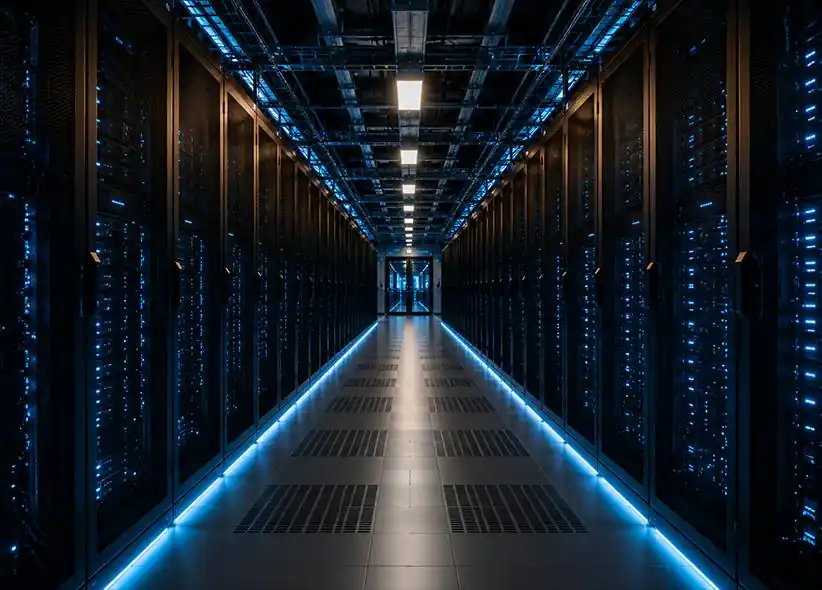
Capacity is only real when it runs
Installed is not the same as operational.
A finished hall full of racks is the midpoint, not the finish line. We focus on the stretch that decides returns: integration, validation, and the operating model that keeps capacity productive.
Infrastructure stack explorer
Eight layers. One system.
Select a layer to see what has to go right, what commonly goes wrong, and where an independent engineering view helps.
Layer 1 of 8
Power & Cooling
Engineering considerations
- Utility capacity and interconnection timeline
- Rack density vs. air and liquid cooling
- Redundancy topology and maintenance windows
Common failure mode
Designed for yesterday's rack density; liquid cooling becomes a retrofit.
Where we help
Check power and thermal assumptions against the GPU platforms you actually plan to host.
Who we serve
Built for the people committing capital to AI capacity.
Datacenter Developers & Infrastructure Investors
A powered shell is not AI capacity. Density, cooling, network, and operating assumptions decide whether a site can host the GPU platforms tenants actually want — and they are often tested only after capital is committed.
How we help →GPU Cloud & Neocloud Providers
Every week between hardware delivery and customer workloads is idle capital. Bring-up, fabric tuning, scheduling, and multi-tenant operations decide how quickly — and how reliably — capacity turns into revenue.
How we help →EPC & Infrastructure Delivery Partners
Facility scopes are well understood. The IT, network, and platform layers that sit on top of them — and the acceptance criteria that span both — are where schedules slip and handovers fail.
How we help →Enterprise & Hyperscale Infrastructure Teams
Adding GPU capacity changes power, cooling, networking, scheduling, and operations at once. Treating it as a hardware purchase leaves the hardest problems for later.
How we help →
Our approach
An engineering lifecycle, not a slide deck.
- 01
Assess
What is really here, and what will it take?
- 02
Architect
What should we build, and in what order?
- 03
Integrate
How do many parties deliver one system?
- 04
Validate
Does it meet the definition of done — end to end?
- 05
Operate
Can the team run it — and grow it?
Talk to us before you commit millions to an AI infrastructure project.
A short conversation about your site, hardware plan, or platform is often enough to surface the risks worth examining.